
Biochar for Soil Health Enhancement in India
From crop residue to stronger soils.
Our first project converts agricultural residue into biochar and returns it to farmers’ fields. Every batch is measured, recorded and traceable.
- Method
- Biochar
- Farmers
- 579
- Carbon stored for
- 1000+ yrs
The problem
After harvest, crop residue is often burned in the open. What the crop took from the soil is lost instead of returned.
Smoke
Open burning releases greenhouse gases and harmful air pollutants.
Soil
Carbon and nutrients in crop residues are lost instead of being returned to the soil.
Farmers
Smallholders face the long-term cost of declining soil health.
What the project does
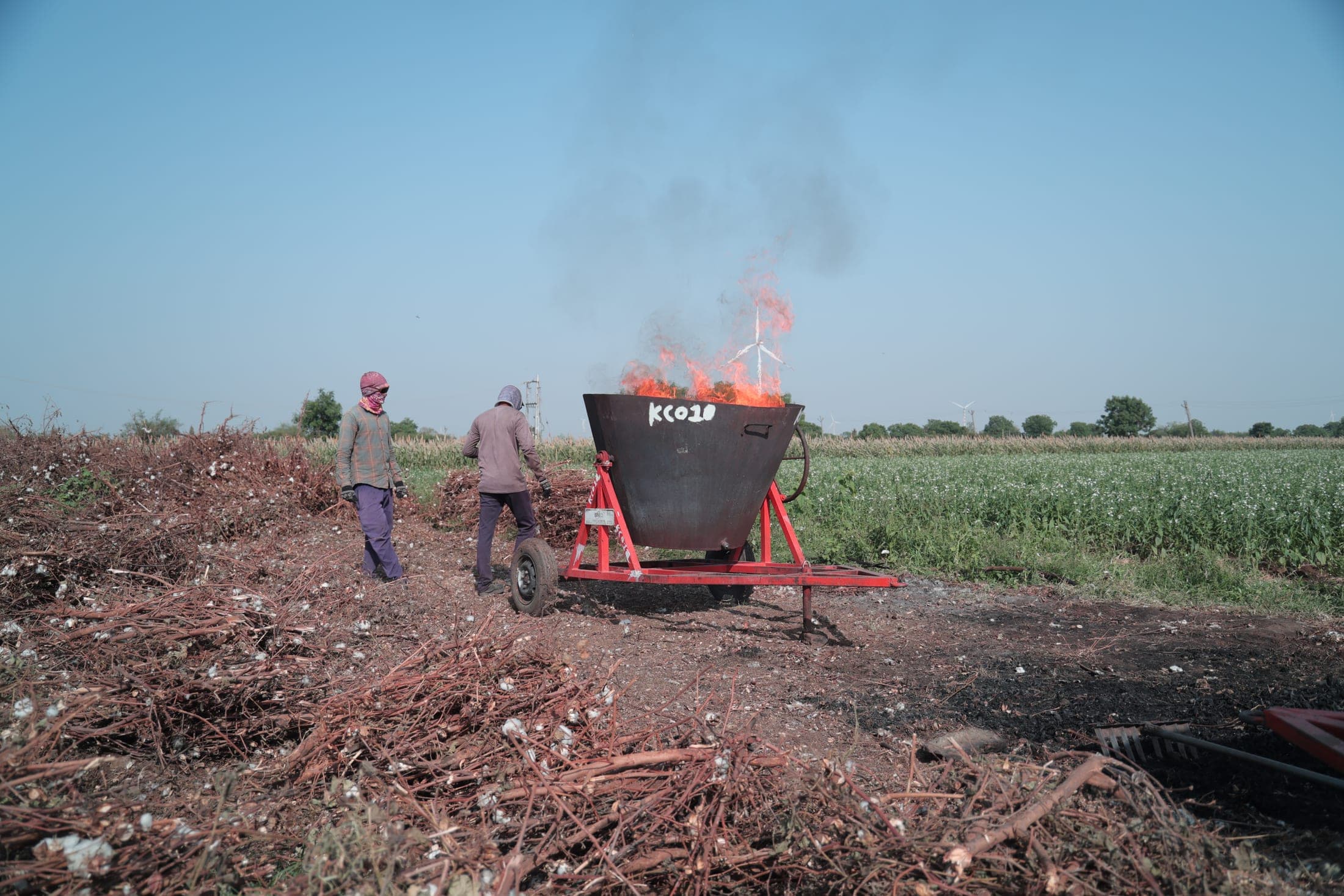
The kiln goes to the field. The residue becomes biochar, not smoke.
Farmers receive training and support to convert their crop residue into biochar on site.
- 01
Residue is gathered and checked
Moisture is recorded for every batch.
- 02
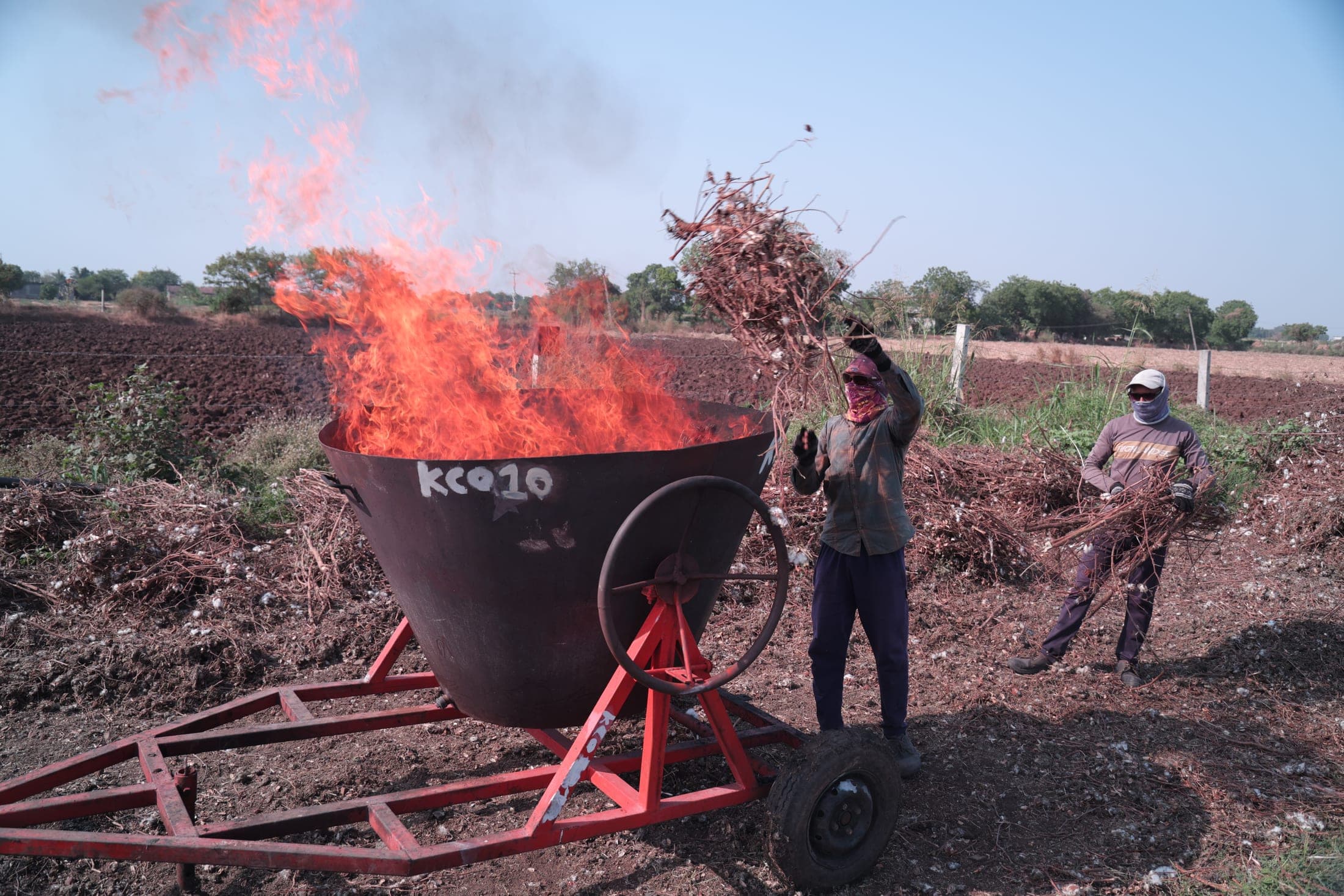
Residue is converted in a kiln on the farm
Low-cost kilns convert it into stable biochar on site.
- 03
Biochar returns to the field
It is applied to the farmer’s own soil.
- 04
Every step is recorded
Geotagged photos and field data create a traceable record.
And how we mix it right
Charged first, mixed to neutral.
Raw biochar is first charged, loaded with nutrients and microbes, then mixed into soil to a standard. We mix only to neutral: we let biochar do its work rather than forcing soil pH. Every field team follows the same recipe, so the result is consistent across clusters.
Recipe tiers
Set by crop and soil.
8 step-cards
One method, everywhere.
Mix to neutral
No forced pH.
Rotate the strip
A new area each year.
The application area is logged digitally, so a different part of the field is treated each season: small, accurate doses that build the soil over years rather than one thin spread.
Traceability
Every credit is backed by evidence.
One unbroken chain from kiln to field. The data is collected by trained Climapreneurs and the field team.
- 01
A unique ID
Every production run carries its own batch code.
- 02
A place
Its location is tagged by GPS at the source.
- 03
A time
It is timestamped and sequence-checked, so no two runs overlap or double-count.
- 04
A verified record
It is entered and verified on the KriSHE app before anything moves forward.
- Field-level data
- Digital traceability
- Independent verification
- Local Climapreneur network
The credits
Durable carbon removal, farmer-first.
Each issued credit represents one tonne of CO₂e removed and stored through the project, with carbon finance supporting the farmers and local operators behind it.
- Verification
- AI-verified applicationData integrity from field to report.
- Monitoring
- Soil-based MRVAudit-grade traceability.
- Revenue
- Farmer-first economicsYour purchase helps finance climate action in rural communities.
- Permanence
- 1,000+ yearsNature-based removal, stored in soil.
- Certified by Carbon Standards International
- Global Artisan C-Sink standard
Enquire
Tell us what you’re looking for.
Looking to buy credits, partner with KriSHE, or visit a project site? Start here. We’ll get back to you by email and take it from there.